
Superyacht vs. Megayacht: What's the Difference?
Learn the difference between megayacht, superyacht, gigayacht and more.


In the rarefied world of large private yachts, terminology matters: not merely for precision's sake, but because the words we use reflect genuine distinctions in capability, purpose, and the very nature of ownership. Yet few terms in yachting generate more confusion, or provoke more debate among industry insiders, than the definitions of "superyacht" and "megayacht." These classifications, while seemingly straightforward, encompass complex questions of size, luxury, capability, and even cultural perception that reveal much about how the yachting world has evolved.
The Traditional Dividing Lines
Historically, the yachting industry has operated with a relatively clear demarcation: a superyacht for sale is any privately owned, professionally crewed yacht measuring 24 meters (approximately 80 feet) or longer. This threshold, established decades ago when such vessels were genuinely exceptional, marked the point at which a yacht typically required permanent professional crew, represented a substantial capital commitment, and entered the realm of true luxury vessels.
The term "megayacht" emerged later, as the superyacht market matured and certain vessels began to dwarf even the most impressive yachts of previous generations. While definitions vary across publications, industry organizations, and even between hemispheres, the most commonly accepted threshold places megayachts at 60 meters (approximately 200 feet) or longer. Some authorities use 50 meters as the dividing line; others argue for 75 meters or even 100 meters, particularly when discussing the most extraordinary vessels afloat.
These numerical boundaries, however, tell only part of the story. A 25-meter yacht and a 59-meter yacht are both technically superyachts, yet they share virtually nothing in common beyond saltwater and luxury. Similarly, the difference between a 59-meter yacht and a 61-meter yacht is negligible, yet one is classified as a superyacht and the other as a megayacht. The classifications, while useful, sometimes obscure more than they illuminate.
A Question of Scale and Capability
Stand on the bridge deck of a 30-meter superyacht—a substantial vessel by any reasonable measure—and you'll experience a yacht that remains fundamentally manageable. The captain knows every system intimately, the crew of perhaps five or six professionals can operate her efficiently, and the owner often maintains a genuine hands-on relationship with the vessel. She can access the majority of Mediterranean harbors, fit into established marina infrastructure, and be operated with relative flexibility.
Now consider a 70-meter megayacht. The bridge resembles that of a small commercial vessel, with integrated navigation systems, dynamic positioning, and communication arrays that would satisfy a research vessel. The engineering spaces contain redundant systems for every critical function—multiple generators, watermakers, sewage treatment plants, stabilization systems, and technical infrastructure that requires specialist engineering knowledge. The crew quarters accommodate 16-20 professionals, representing an organizational complexity more akin to a boutique hotel than a traditional yacht.
The scale shift is not merely additive but transformative. A megayacht represents an entirely different category of vessel—one that operates beyond the constraints that govern smaller yachts, one that creates its own context rather than adapting to existing infrastructure.
Volume: The Hidden Distinction
Perhaps the most significant practical difference between superyachts and megayachts lies not in length but in volume, measured in gross tonnage (GT). Maritime regulations use GT to assess vessel size, and for good reason: volume determines what a yacht can contain, accommodate, and offer.
A 35-meter superyacht might register 200-300 GT. This provides sufficient volume for four or five guest cabins, crew accommodation, a respectable saloon and dining area, and perhaps a modest beach club or gym. The experience is unquestionably luxurious, but space allocation requires compromise. The master suite occupies perhaps 25-30 square meters; guest cabins might measure 12-15 square meters each. Entertainment areas are generous but not vast.
A 70-meter megayacht, by contrast, might register 1,500-2,000 GT or more—five to ten times the volume. This additional space transforms the possible. Full-beam master suites spanning 80-100 square meters become standard, often featuring separate his-and-hers bathrooms, walk-in wardrobes, private studies, and direct access to private decks. Guest suites approach the size of fine hotel rooms. Multiple saloons—formal and informal, interior and exterior—allow guests and crew to disperse according to activity and preference.
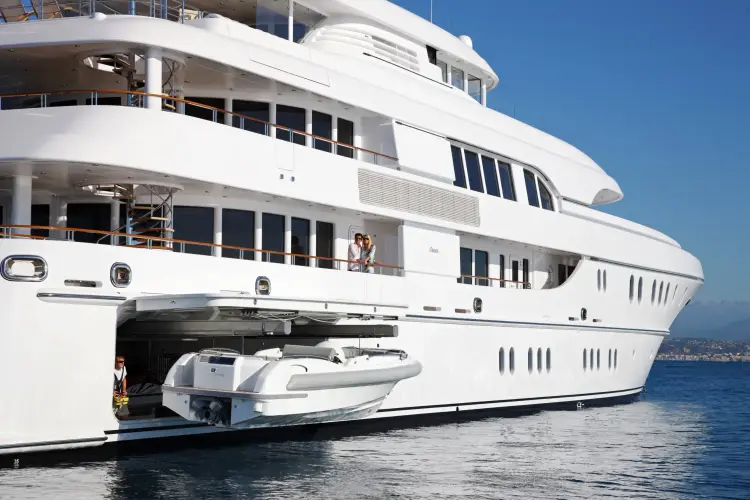
But volume enables more than just larger rooms. It permits amenities that smaller yachts simply cannot accommodate: swimming pools, often with counter-current systems; helipads capable of receiving substantial helicopters; wellness centers with treatment rooms, saunas, hammams, and plunge pools; beach clubs that unfold into genuine waterfront lounges; tender garages housing 8-meter tenders, jet skis, submersibles, and extensive water sports equipment; wine cellars maintaining optimal conditions for serious collections; private cinemas with commercial-grade audio and projection systems.

Megayacht Crew Structure and Expertise
The crew requirements for superyachts and megayachts differ not just numerically but structurally. A 30-meter superyacht typically operates with a relatively flat hierarchy: captain, engineer, chef, and several stewardesses who often rotate duties as needed. The captain might personally handle many administrative tasks, the engineer maintains direct involvement with all systems, and the interior team functions with considerable flexibility.
Megayacht operations demand genuine organizational depth. The deck department includes captain, first officer, second officer, bosun, and multiple deckhands, each with defined responsibilities and watch-keeping schedules. The engineering department requires a chief engineer, second engineer, and often additional technical specialists—electricians, IT specialists, AV technicians—to manage the complex systems. The interior department mirrors a luxury hotel: chief stewardess, second stewardess, junior stewardesses, and often additional specialists such as spa therapists or childcare professionals.
This organizational complexity brings significant advantages. Megayacht crew can provide seamless, anticipatory service that seems effortless precisely because it is distributed across sufficient personnel. Watch systems ensure 24-hour operational readiness. Specialized expertise means systems are maintained to the highest standards. But it also introduces management challenges: crew dynamics become more complex, communication requires formal systems, and the captain's role shifts from hands-on operator to executive manager.
Compensation reflects these differences. While a captain on a 35-meter superyacht might earn €80,000-120,000 annually, a captain commanding a 70-meter megayacht typically earns €150,000-250,000 or considerably more, reflecting both the responsibility and the specialized expertise required. Total annual crew costs for a superyacht might represent €400,000-800,000, while megayacht crew expenses can easily exceed €2-3 million annually.
Operational Independence and Range
One of the megayacht's defining characteristics is operational independence—the ability to function as a self-sufficient platform in remote locations for extended periods. While superyachts certainly venture to distant waters, they typically operate within established yachting infrastructure, relying on regular access to marinas, provisioning, and technical support.
Megayachts are designed for genuine expedition capability. Fuel capacities of 200,000-400,000 liters or more provide transoceanic range with substantial reserves. Water-making systems can produce 10,000-20,000 liters daily, supporting extended periods at anchor. Sewage treatment systems meet or exceed the most stringent international regulations, allowing operation in protected waters. Waste management systems can compact and store refuse for weeks between disposal opportunities.
The technical infrastructure extends further. Advanced stabilization systems—often combining zero-speed gyroscopic stabilizers with underway fin systems—maintain comfort in conditions that would send smaller yachts seeking harbor. Redundant generators ensure uninterrupted power. Sophisticated navigation and communication systems provide capabilities approaching commercial vessels. Some megayachts carry certified helidecks, transforming remote anchorages into accessible destinations.
This independence comes at considerable cost. The systems enabling it require constant maintenance, specialist expertise, and regular investment. But for owners who genuinely use their yachts for extended cruising—Arctic expeditions, South Pacific exploration, transoceanic passages—this capability justifies the expense.
The Infrastructure Challenge
Perhaps no single factor distinguishes megayachts from superyachts more tangibly than their relationship with coastal infrastructure. A 35-meter superyacht, while certainly requiring a substantial berth, can access the vast majority of established marinas worldwide. She fits into standard Mediterranean harbors, can navigate most waterways, and presents few constraints when selecting destinations.
Megayachts, particularly those exceeding 80 meters, inhabit a different reality. Marina capacity becomes a genuine constraint—many prestigious harbors simply cannot accommodate vessels of such scale. Those that can typically charge premium rates reflecting both the space occupied and the limited availability. A berth for a 70-meter yacht in Monaco during the Grand Prix might command €100,000-150,000 for the week; larger vessels pay proportionally more.
Draft presents additional complications. While most superyachts draw 2.5-3.5 meters, megayachts often draw 4-5 meters or more, eliminating access to shallow harbors and anchorages. This seemingly modest difference excludes numerous destinations—entire island groups, historic harbor towns, secluded anchorages—that constitute the essence of certain cruising grounds.
The solution, increasingly, is for megayachts to create their own infrastructure. Many remain at anchor in roadsteads or well-protected bays, using substantial tenders—themselves the size of respectable yachts—to access shore. Some owners invest in marina berths at multiple strategic locations, maintaining semi-permanent bases that accommodate their vessel's requirements. Others simply accept that their yacht's capabilities come with certain limitations on where she can physically be.
Design Philosophy and Construction
The design and construction of superyachts and megayachts reflect fundamentally different challenges. A superyacht, even a sophisticated 40-meter vessel, remains within the envelope of established yacht-building practice. Naval architects work with proven hull forms, relatively conventional engineering systems, and construction techniques refined over decades. The result is typically excellent, but evolutionary rather than revolutionary.
Megayacht design often requires bespoke solutions to unique problems. How do you construct a 100-meter vessel that must withstand ocean passages yet meet yacht classification standards? How do you distribute weight for proper trim when accommodation occupies six decks? How do you engineer stabilization systems that can handle a vessel displacing 2,000 tons? How do you integrate technical systems that rival commercial vessels while maintaining the aesthetic and operational standards of a private yacht?
The construction process reflects this complexity. While superyachts might be built in 18-36 months, megayachts typically require 3-5 years from contract signing to delivery, with the largest vessels sometimes extending to 6-7 years. The shipyards capable of building megayachts represent an exclusive group—perhaps 15-20 yards worldwide possess the facilities, expertise, and organizational capability required.
This specialization drives costs dramatically. While per-meter pricing is a crude measure, superyachts typically cost €150,000-250,000 per meter of length, depending on specification and builder. Megayachts often exceed €500,000-1,000,000 per meter or more for the most sophisticated vessels, reflecting both the technical complexity and the bespoke nature of nearly every system and component.
The Ownership Experience
The experience of owning a superyacht versus a megayacht differs as profoundly as the vessels themselves. Superyacht ownership, while certainly demanding significant resources, remains within the realm of personal management. Many owners maintain direct relationships with their captains, involve themselves in operational decisions, and participate actively in planning cruises and managing the vessel's calendar.
Megayacht ownership typically requires professional management infrastructure. Many owners engage specialized yacht management companies that handle technical oversight, crew recruitment, regulatory compliance, insurance, accounting, and the myriad details that attend operating what is effectively a small ship. The owner's relationship becomes more arms-length, mediated through management professionals, though many owners certainly remain engaged with major decisions and enjoy close relationships with senior crew.
The financial implications are substantial. While rules of thumb are imprecise, superyacht operating costs typically run 10-15% of the vessel's value annually, excluding major refits or damage. For a €10 million superyacht, this suggests annual costs of €1-1.5 million covering crew, fuel, maintenance, insurance, moorage, and administrative expenses.
Megayacht operating costs follow similar percentages but apply to dramatically higher capital values. A €50 million megayacht might incur €5-7.5 million in annual operating expenses, with fuel alone potentially representing €1-2 million for an active season. Add significant refits every 5-10 years (often €5-10 million or more) and the total cost of ownership becomes substantial even by the standards of ultra-high-net-worth individuals.
Regulatory Complexity
The regulatory environment for yachts becomes increasingly complex with size. Superyachts under 24 meters (the commercial certification threshold in many jurisdictions) operate under relatively straightforward recreational vessel regulations. Once exceeding this length, yachts enter the realm of commercial certification, even when purely privately used, triggering requirements for crew certifications, safety equipment, stability documentation, and operational procedures.
Megayachts, particularly those exceeding 500 GT, face additional regulatory layers. The Large Yacht Code (LY3) governs vessels from 24 meters to 500 GT, but beyond 500 GT, yachts fall under the Passenger Yacht Code (PYC), which imposes requirements approaching commercial passenger vessels: advanced firefighting systems, life-saving equipment for crew and guests, sophisticated stability and damage control capabilities, and extensive documentation and certification.
For yachts over 3,000 GT—a threshold increasingly common among the largest megayachts—requirements intensify further, including considerations around ballast water management, emissions compliance, and even architectural design standards for evacuation routes and fire zones. These regulations exist for excellent reasons—safety at sea—but they add layers of cost and complexity that smaller yachts do not encounter.
The International Maritime Organization (IMO) and various flag state authorities continue developing new regulations addressing environmental impact, emissions, waste management, and crew welfare. Megayachts, due to their commercial classification and public profile, often face closer scrutiny and higher compliance standards than smaller recreational vessels.
Environmental Considerations and Public Perception
Size attracts attention, and megayachts increasingly find themselves at the center of environmental and social debates about luxury consumption, resource usage, and inequality. A 70-meter megayacht cruising at 15 knots might consume 400-600 liters of fuel per hour, generating carbon emissions that inevitably draw criticism in an era of climate consciousness.
The industry has responded with genuine innovation. Hybrid propulsion systems, solar panels integrated into superstructures, advanced hull designs reducing resistance, and sophisticated waste management systems all represent meaningful progress. Some megayacht owners have commissioned genuinely groundbreaking vessels: yachts with hybrid propulsion reducing emissions by 30-40%, vessels designed specifically for oceanographic research alongside private use, platforms equipped with advanced monitoring systems documenting ocean health.
Yet the optics remain challenging. A superyacht, while certainly luxurious and resource-intensive, attracts less public attention and criticism than a megayacht, which becomes a visible symbol of extreme wealth. This perception affects everything from marina reception to regulatory treatment to social license to operate in certain jurisdictions.
Forward-thinking owners increasingly recognize that megayacht ownership in the 21st century carries responsibilities beyond traditional notions of property rights. Many support marine conservation, fund oceanographic research, and operate their vessels with genuine attention to environmental best practices—not as public relations gestures but as sincere efforts to balance their passion for yachting with planetary stewardship.
Charter Market Dynamics
The charter market reveals another distinction between superyachts and megayachts. Superyachts from 30-50 meters represent the charter market's sweet spot—large enough to offer genuine luxury and space, yet small enough to be operationally efficient and accessible to a broad range of charter clients. Weekly charter rates might range from €50,000-300,000 depending on the vessel, season, and specification.
Megayachts occupy a more rarified charter segment. Weekly rates for a 70-meter yacht typically start at €500,000 and can easily exceed €1 million for the most prestigious vessels during peak seasons. The client base is necessarily smaller, but those who charter megayachts often seek something specific that only vessels of such scale can provide: corporate entertainment at major events, milestone celebrations with extended family, or simply the experience of the world's most exceptional yachts.
The economics differ substantially. While charter income can offset some operating costs, few megayachts generate sufficient revenue to cover annual expenses, let alone capital depreciation. Most megayacht owners who offer their vessels for charter do so primarily to offset costs while the owner is not using the yacht, rather than as a genuine profit center.
The Question of Value
Does a megayacht represent better value than a superyacht? The question itself reveals a category confusion: these vessels serve different purposes and appeal to different priorities. A well-executed 40-meter superyacht delivers extraordinary experiences within a more manageable operational framework and at a fraction of a megayacht's cost. For many owners, this represents optimal value.
Megayachts, conversely, enable experiences impossible aboard smaller vessels: the ability to accommodate three generations of family comfortably for weeks at a time, to host business associates in surroundings rivaling the world's finest hotels, to venture to remote destinations with complete self-sufficiency, to enjoy amenities and space approaching small private estates. For owners whose needs and desires align with these capabilities, the additional cost represents reasonable value.
The Gigayacht Horizon
The yacht market continues its inexorable progression toward ever-larger vessels. A new category has emerged: gigayachts, typically defined as vessels exceeding 100 meters (328 feet). Currently, fewer than 100 yachts worldwide exceed this threshold, but the orderbook suggests continued growth. These vessels (several exceeding 150 meters)represent the absolute pinnacle of private yachting, with capabilities and luxury approaching small cruise ships.
The emergence of gigayachts has, in some sense, clarified the superyacht/megayacht distinction. Where once a 60-meter yacht seemed extraordinary, it now represents the entry point to the megayacht category, with the most remarkable vessels operating at twice that scale or more. What was once aspirational has become, if not commonplace, at least established: a mature category rather than an emerging one.
Making the Choice
For prospective owners considering where they fit within this spectrum, honest self-assessment proves essential. How many weeks annually will you realistically use the yacht? How many guests do you typically host? What destinations genuinely attract you? Do you value operational simplicity or comprehensive capability? How important is access to specific harbors versus operational independence? What level of management complexity are you prepared to engage with?
A 35-meter superyacht, properly specified and expertly managed, can deliver an utterly exceptional yachting experience—intimate enough to retain personal character, capable enough to cruise extensively, luxurious enough to satisfy the most discerning owners. Many experienced yachting families who have owned larger vessels ultimately return to this size range, valuing its balance of capability and manageability.
Megayachts serve those whose requirements genuinely demand additional scale... larger families, extensive entertaining, expedition cruising, or simply the desire for amenities and space that smaller yachts cannot provide. The additional operational complexity and cost represent not unnecessary burden but reasonable investment in achieving specific objectives.
Superyacht vs. Megayacht: Distinction with Purpose
The difference between superyachts and megayachts encompasses far more than length or gross tonnage. These categories represent distinct approaches to yachting, different philosophies about the role a yacht plays in an owner's life, alternative visions of what constitutes appropriate scale and capability.
A superyacht offers genuine luxury yachting accessible to a broader population of successful individuals; still exclusive, certainly, but achievable for those who have prospered substantially in business or profession. She provides authentic yachting experiences, takes you to remarkable places, and does so with manageability and relative efficiency.
A megayacht operates at a different scale entirely: financially, operationally, and experientially. She represents not merely a larger version of a superyacht but a qualitatively different class of vessel, one that establishes its own standards rather than conforming to existing norms. She appeals to those who seek the absolute pinnacle of yachting, who have both the resources and the genuine need for her extraordinary capabilities.
Neither is categorically better; they simply serve different purposes for different owners. The superyacht-megayacht distinction, properly understood, helps prospective owners identify not which vessel is superior in the abstract, but which vessel aligns with their actual needs, usage patterns, and yachting aspirations. In a market offering unprecedented choice and quality across all size ranges, this clarity proves invaluable in navigating toward the right vessel: the one that transforms ownership from obligation into enduring pleasure.
Related Articles
Continue exploring related topics and deepen your understanding
This guide covers the best vessels across every major liveaboard category in 2026
This guide explains every major vessel type you will encounter
Learn how modern buyers are no longer finding their yachts on listing platforms.
Learn how flag selection interacts with ownership, tax residence, crew employment, and more.
Learn how different yacht marketplace platforms stack up according to seller and dealer needs.
The right role for a 3D tour in a remote purchase process is pre-qualification, not due diligence.