
What to Look for When Buying a Used Yacht: A Master Checklist
This checklist covers the main areas every buyer should review before committing to buying.


Buying a used yacht generally offers a faster, sometimes cheaper path to yacht ownership or to upgrading.
But just as with purchasing a new yacht, the process demands discipline and careful review. A used yacht reflects years of operation, service choices, upgrades, and often, delayed or forgotten routine maintenance. At the end of the day, if you want perfection in a yacht… grit your teeth and buy a new vessel. If you're hoping to stretch your dollar farther and to buy a used yacht, pay attention to clarity, and treat clarity like the goal.
You want to know what you're buying, what the operating costs will be, and your maintenance exposure… the lifestyle fit will matter, but it should be the smallest part of your checklist. This checklist covers the main areas every buyer should review before committing to buying that gorgeous-looking used yacht that’s probably got a few wince-worthy secrets.
The purpose stays simple: reduce risk, avoid hidden costs. Some buyers rush this phase, and those buyers inevitably pay for it later.
Start With the Basics
Before stepping aboard, you should review the basics. Early review of records and direct discussion reveal problems fast. Conversations matter, but realistically, paperwork matters more. Key questions to ask include:
- What's the reason for the sale?
- How long has the current owner had the vessel?
- What's the primary location the vessel operates out of?
- What's the vessel's history of use?
- Can you review the routine maintenance and upgrade history?
- Can you review major refits or other work?
Clear and consistent answers suggest responsible ownership. Most seasoned yacht owners will work with reliable, reputable professionals who help them keep detailed records, and in the best-case scenario, you get a few PDFs, a few paragraphs in an email, and a few phone numbers to call.
Missing details raise concern for obvious reasons. Incomplete records aren't necessarily a dealbreaker… consider them a potential red flag. Short answers deserve follow-up, and, obviously, any maintenance without records potentially didn't happen.
Hull and Structural Integrity
The hull forms the base of the yacht. Cosmetic flaws affect appearance. Structural issues affect safety and value. You treat this area with priority. Inspect the hull for.
- Blistering, delamination, or osmotic damage
- Cracks near stress areas like struts, rudders, and stabilizers
- Signs of grounding or collision repair
- Fair hull lines and uniform paint condition
- Condition of through-hull fittings and seacocks
On fiberglass yachts, moisture readings during survey matter. Elevated readings indicate water intrusion and potential future repair costs. On aluminum or steel yachts, inspect for corrosion, pitting, and weld quality. Poor metal work shortens service life. This section often decides whether a deal moves forward.
Engines and Mechanical Systems
Engines represent one of the highest replacement costs onboard. Mechanical condition influences operating expense and reliability. You review data, not impressions. Evaluate engines by reviewing.
- Total engine hours compared to age and usage pattern
- Complete service records and oil analysis history
- Cooling system condition, including heat exchangers
- Exhaust systems for corrosion or leaks
- Evidence of fluid leaks or abnormal vibration
Higher engine hours do not signal neglect when service stays consistent. Low-hour engines with long idle periods often show seal failure and corrosion. You look for usage patterns, not hour totals. This area deserves time. Rushing creates expensive mistakes.

Generator and Power Systems
Reliable power supports safety and comfort at anchor and underway. Electrical issues rank among the most common post-purchase problems. Check the following.
- Generator hours and documented service intervals
- Electrical panels with organized wiring and clear labels
- Battery age, battery type, and charging systems
- Inverters and shore power connections
- Signs of overheating or undocumented electrical changes
Messy wiring suggests shortcuts and poor oversight. Electrical modifications without records raise concern. Clean systems reflect disciplined ownership. This inspection often reveals how the yacht was treated overall and directly affects the ongoing costs of ownership.
Plumbing and Water Systems
Water intrusion and plumbing failures create long-term damage. Small leaks spread fast. Repair cost rises quickly when ignored. Inspect the following things:
- Freshwater tanks and pressure pumps
- Water heaters and filtration units
- Black and gray water tanks and discharge plumbing
- Seals around showers, heads, and floor drains
- Signs of leaks behind cabinetry or under flooring
Persistent odors often point to neglected sanitation systems. Odor removal involves labor and material replacement. Buyers often underestimate this cost. This area deserves close attention, especially for yachts previously listed as used yachts for sale.
Navigation and Electronics
Electronics influence value and future spending. Older systems often signal replacement expenses soon after purchase. Evaluate the following:
- Age and brand of navigation displays
- Radar, autopilot, AIS, and GPS operation
- Communication systems, including VHF and satellite
- Wiring quality behind helm stations
- Compatibility with current software updates
Outdated electronics appear on many used yachts. Budget planning should reflect this reality. Some upgrades wait. Others affect safety.
Interior Condition and Fit Out
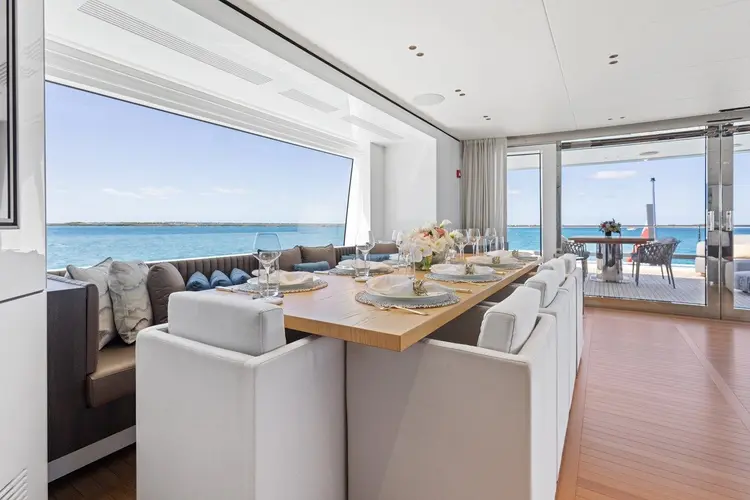
Interior condition reflects ownership habits. Care shows over time. Neglect also shows. Look closely at:
- Flooring, headliners, and upholstery condition
- Water stains, soft panels, or mold presence
- Operation of doors, hatches, and drawers
- Galley appliances and ventilation performance
- Cabin layout alignment with your use
Cosmetic wear occurs with use. Water damage and structural movement signal deeper problems. Those signs rarely stay isolated. Buyers often benefit from reviewing detailed listings of used yachts to see examples of interior conditions and layouts.
Deck Hardware and Exterior Areas
Exterior systems face constant weather exposure. Deferred care accelerates wear. Inspect the following:
- Teak deck thickness and fastener condition
- Railings, cleats, and windlass operation
- Tender condition and davit systems
- Flybridge seating, sunpads, and covers
- Canvas, enclosures, and exterior upholstery
Teak replacement and exterior soft goods involve major expenses. Many buyers overlook this line item.
Maintenance History and Refit Records
Documentation reveals the true condition. Paperwork tells a clearer story than appearance. Review the following:
- Annual service logs and invoices
- Major refits involving engines, paint, or interiors
- Classification or inspection reports, when applicable
- Warranty records for newer components
- Accident history and insurance claims
Thorough records signal disciplined ownership. Gaps increase risk. This pattern appears often.
Builder Reputation and Model History
Builder quality influences aging and support. Design choices matter years later. Research the following:
- Builder track record for structure and systems
- Known issues tied to the specific model
- Parts availability and service access
- Resale performance of comparable yachts
- Owner and broker feedback
Some older yachts from respected yards outperform newer builds from weaker builders. History supports this view. You can explore specific yacht brands and models to understand builder reputation and resale trends.

Sea Trial Performance
A sea trial serves as a functional evaluation. Skipping this step exposes buyers to risk. During the sea trial, evaluate:
- Cold start behavior of engines and generators
- Acceleration, cruising speed, and handling response
- Noise levels, vibration, and exhaust appearance
- Stabilizer performance when installed
- System operation under load
Performance should remain consistent across speeds. Irregular behavior deserves explanation. Short trials still reveal patterns.
Professional Survey and Specialist Inspections
An independent marine surveyor protects your position. Objectivity matters here. A proper survey includes:
- Hull and structural review
- Mechanical and electrical evaluation
- Safety equipment compliance
- Market valuation
- Identification of immediate and future costs
Larger yachts benefit from separate engine surveys and specialist inspections. This approach reduces blind spots. Cost here saves money later.
Ownership Costs After Purchase
Used yacht ownership includes ongoing expenses beyond the purchase price. Planning prevents shock. Plan for:
- Immediate post-purchase maintenance
- Deferred repairs listed in survey reports
- Dockage and storage are tied to the location
- Insurance requirements
- Future refits and upgrades
Clear cost awareness improves ownership experience. Assumptions create stress.
Final Checklist Before Making an Offer
Before committing, confirm the following things:
- Clear and transferable title
- Matching documentation across all records
- Full understanding of survey findings
- Negotiated repair credits or price adjustments
- Feasible insurance and registration
A disciplined final review protects enjoyment and long-term value. Rushed decisions often show regret later.
Finding Clarity
Buying a used yacht focuses on clarity, not perfection. Successful buyers understand current conditions, future requirements, and long-term lifestyle fit. A clear understanding reduces stress later. You see the yacht as a system, not a dream. This checklist, combined with experienced professionals and a methodical approach, improves outcomes. You reduce risk. You limit surprise costs. You increase long-term satisfaction. Shortcuts usually show up later. Discipline pays off here.
Ready to begin your yacht-buying journey?
Visit YachtWay for resources, guidance, and tools focused on buying and selling yachts with confidence. The platform supports informed decisions. Better decisions lead to better ownership.
Related Articles
Continue exploring related topics and deepen your understanding
This guide covers the best vessels across every major liveaboard category in 2026
This guide explains every major vessel type you will encounter
Learn how modern buyers are no longer finding their yachts on listing platforms.
Learn how flag selection interacts with ownership, tax residence, crew employment, and more.
Learn how different yacht marketplace platforms stack up according to seller and dealer needs.
The right role for a 3D tour in a remote purchase process is pre-qualification, not due diligence.