
Yacht Market Trends: What to Expect in 2026
In 2026 the yachting industry has slowed from pandemic purchasing and matured.


The global yacht industry now stands at a watershed moment as it puddles its way through 2026, a year so far characterised by dramatic upheavals. After the pandemic-induced frenzy of 2021-2023, in which buyers competed heavily for limited inventory and shipyards filled orderbooks extending years into the future, the market has transitioned a more measured pace.
This evolution represents not weakness but maturity, as buyers provide deeper due diligence, builders improve their approaches, and the entire ecosystem shifts to new economic realities, technological possibilities and societal expectations.
For discerning buyers, sellers, and industry observers, understanding these currents proves essential to navigating what promises to be a complex but ultimately rewarding year, particularly for those researching the market through platforms such as YachtWay.
Market Fundamentals: Growth Amid Recalibration
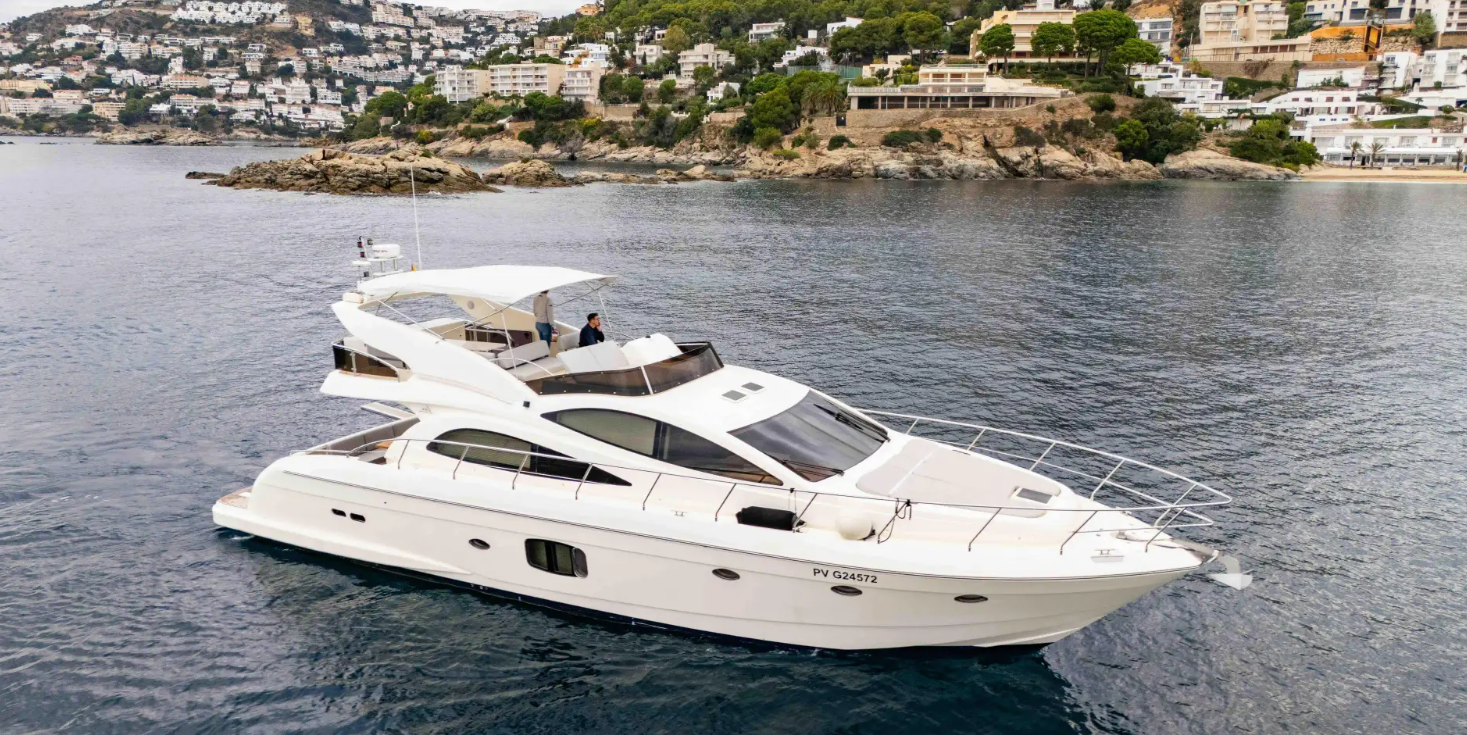
The numbers paint a picture of sustained growth with realism. The global yacht market is valued at USD 10.34 billion as of 2025 and is expected to grow with a compound annual growth rate of 5.2% till 2033 with some sub-segments showing even higher growth. The luxury yacht segment in particular is set to reach USD 11.91 billion by 2026, growing to USD 14.58 billion by 2030.
Yet these aggregate numbers conceal major segmentation, a reality that becomes immediately visible when reviewing current inventory across used boats for sale.
The market is no longer moving in lockstep - some size categories, regions, and types of yacht are showing some very different trajectories. The range of 30-40 meters continues to be very active, due to buyers looking for economic running and easy crewing yachts that can be successfully taken on coastal and long-range itinerant cruises. This part is equally attractive for the first-time owners and experienced people looking for simplification of operation without compromising luxury.
The larger 40-60 meter range is still the performance engine in the market as there are buyers with substantial resources who demand comprehensive capabilities. Beyond 60 meters, the market gets more particularistic, with transactions driven by individual owner requirements rather than broader market forces.
The New Buyer Mindset: Deliberation Over Urgency
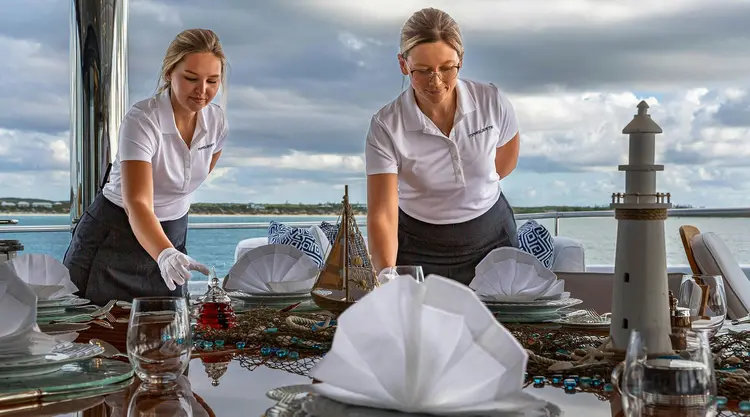
Perhaps the biggest change that characterizes 2026 is the change in buyer psychology. Unlike the buying on the fly "before-its-gone" vehicles that dominated 2021-2023, with a whole range of online vehicles demanding considerable resources, 2026 buying is characterized by a deeper level of due diligence, structured comparisons and willingness to wait for the right opportunity. This deliberation represents not hesitation but sophistication - buyers now are approaching yacht purchase with as much analytical care as they would apply to any other major purchase.
Clients want to know pricing, verifiable technical information and better expectations around resale value and are transforming the business of yacht brokerage from all-relationship art to all-data science, a shift reflected in how buyers increasingly evaluate listings on YachtWay.
The implications spread all the way through the market: sellers must justify pricing with documentation and maintenance records; brokers must offer objective analysis in combination with advocacy; and builders must prove value with engineering excellence and operational efficiency rather than marketing narratives alone.
This type of analysis also extends to operating considerations. Fuel efficiency, crew requirements and maintenance-related efficiency is right up there on the top of almost every priority list. Buyers are looking for yachts designed with reliability, redundancy and quiet operation - vessels that can support cruising around the globe with nothing complicated about them associated with older, dated platforms.
Regional Dynamics: A Shifting Global Landscape
Europe retains its status as a buying market and the center of yacht construction, with demand remaining stable especially among buyers with ties to the Mediterranean lifestyle patterns. Italian yards continue to tap into their heritage, craftsmanship and design excellence and the larger custom and semi-custom rampants are dominated by Northern European builders who boast of engineering and innovative thinking.
Yet the geographical center of gravity changes in very subtle ways. The middle east is also expanding quite rapidly, in terms of investments in marina infrastructure with multiple investments in Dubai, Abu Dhabi, Qatar and Saudi Arabia. The opening of places such as NEOM's Sindalah Island opens up alternative cruising grounds, which may change typical migration routes between Mediterranean summer and Caribbean winter seasons.
The Asia Pacific region is showing rapid growth with actively used superyachts of 30 meters plus growing from 372 in 2022 to 530 in 2024. While still only a percentage of the world fleet, it is 42% growth in two years that indicates real movement. As regional infrastructure is developed and cruising grounds more accessible, Asian wealth is increasingly expressing itself through yacht ownership instead of chartering.
North America retains the status of a sophisticated market with roughly 35-40 percent of US brokerage sales taking place within the greater Fort Lauderdale market, while similar high-activity hubs such as Miami continue to anchor regional demand. The Fort Lauderdale International Boat Show's October timing is also twofold - for demonstrating vessels and creating leads for Caribbean winter charter season with booking increases of 25-30% in the following 90 days.
Sustainability: From Aspiration to Expectation
What was once a marketing differentiator has transformed to a basic requirement in the environmental space. In 2025, sustainability became a "must have" as opposed to a "nice to have" feature when it came to charter and new build, influencing client choices especially among European and North American customers, where regulatory pressures and environmental consciousness run strongest.
The technological response is on many fronts. Hybrid systems using diesels and electric motors provide a reduction in fuel use and emissions for low-speed cruising use, with immediate practical benefits as well as environmental creds. Feadship's Breakthrough, the world's first hydrogen fuel-cell superyacht, can cruise emission-free for one week at 10 knots, showing that zero emissions cruising has moved from the drawing board and turned into reality.
Solar technology is very advanced. Bifacial capturing sunlight on both sides of the panel allows for an increase of up to 30% of the potential energy use with contemporary design integrated into yacht design; it powers on board functions and creates a lower fossil fuel dependency. The cumulative impact of increased solar arrays, improved energy management, and hybrid propulsion systems means several modern yachts can remain tied up to pristine areas for longer periods without powering up generators, retaining the serenity that attracted them there initially.
Yet authentic progress means going beyond specifics of individual vessels to innovation in systems. The industry is still wrestling with how to have standardized environmental metrics, and there is more than one index (SEA Index, YETI, Blue ESG's Superyacht Carbon Intensity Indicator) attempting to measure and compare the environmental impact of different vessels. The fragmentation itself represents progress; the challenge for 2026 and beyond lies in consolidating these efforts into accepted standards that enable meaningful comparison and drive continuous improvement.
Vessels that have verifiable green credentials will command 10-15% premium charter rates in Mediterranean protected zones, with heavily restricted operation of vessels not in line with compliance in key cruising areas including French marine parks and Greek protected waters, a factor increasingly influencing buyer behavior across used yachts for sale. Sustainability hence becomes a competitive advantage instead of simply compliance requirement.
Technology Integration: Intelligence and Connectivity
The process of digitization accelerates yachting in many dimensions. At the consumer level, buyers are starting their journey online and discovery, comparison, validation and short-listing are increasingly done long before a broker meeting or dock-walk. This reality changes the direction of marketing, digital visibility becomes incomprehensible without commercial performance.
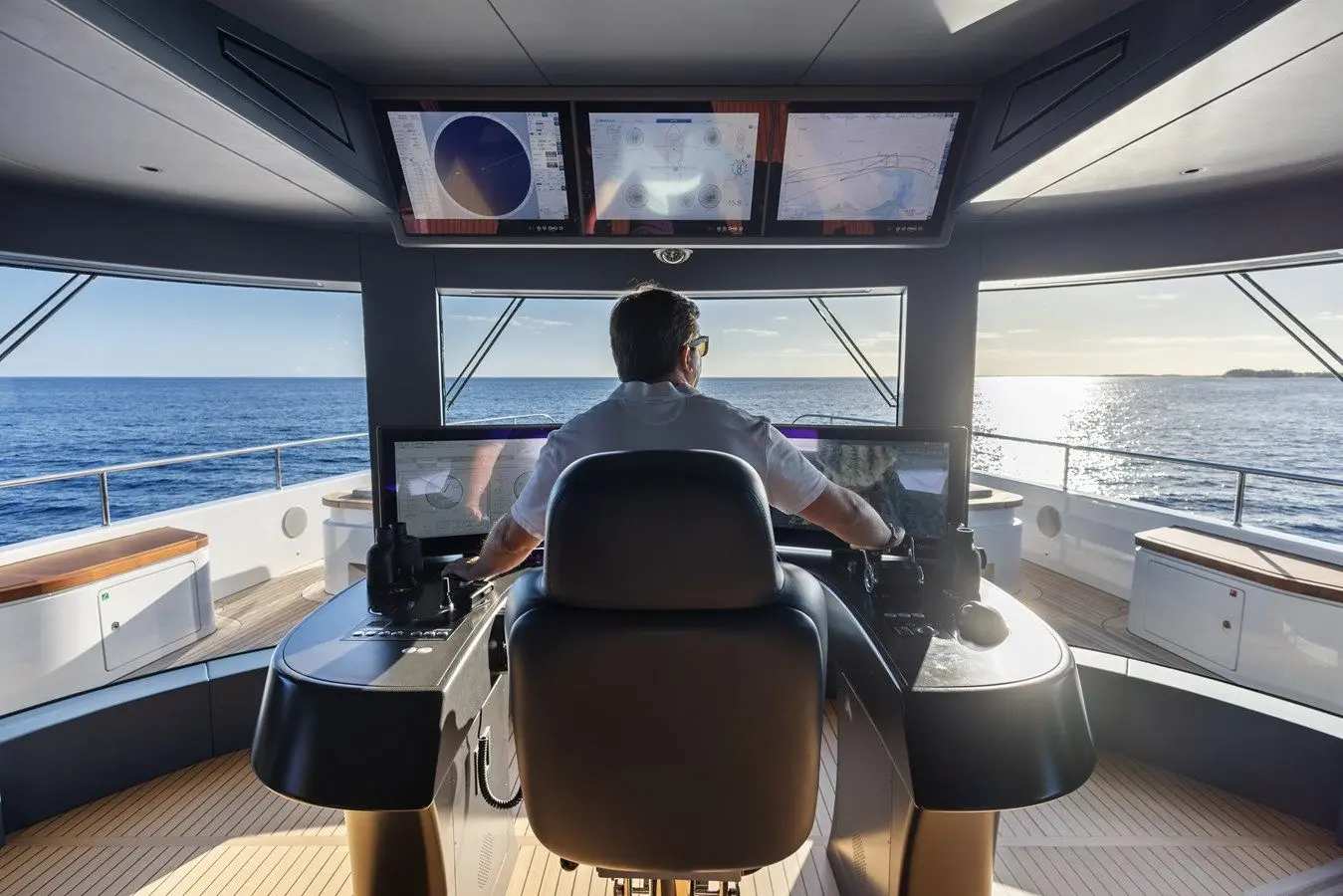
On board, the principle of artificial intelligence serves more and more new concepts, from voice control to energy and navigation management: Yachts become more intuitive, safer and more efficient. Advanced monitoring systems give real-time data diagnostics that predict maintenance needs before failures happen and keep operations running as efficiently as possible at all times.
Connectivity itself revolutionises the yachting experience. Starlink and similar satellite systems deliver genuine high-speed internet anywhere on earth, enabling remote work, streaming entertainment, and constant communication. For younger owners in order to integrate yachting into flexible work lifestyles, this connectivity is a need rather than a convenience.
The charter sector enjoys an especially fruitful relationship with technology. Virtual reality walkthroughs provide an inclusive overview of yachts to allow clients to better explore spaces before booking, this has the benefit of reducing uncertainty and improving booking conversion. AI-assisted platforms optimize itinerary planning according to weather, preferences and local events, which creates more satisfying experiences today while reducing the workload of the crew.
The Refit Renaissance: Lifecycle Investment Over New Build Speculation
One of the trends that defines 2026 is the rise of refit and upgrade activity. Refit activity is projected to increase dramatically throughout 2026, with owners investing in hybrid propulsion with creations, next-generation stabilizers, energy efficiency system enhancements, and wellness-forward design.
Multiple factors are causing this shift. Extended new build delivery times - many yards now delivering on 2028-2029 - leans buyers towards good brokerage yachts that they can upgrade to current standards. Rising new-build costs make comprehensive refits very attractive alternatives. And the pace of propulsion and energy management technology change means even the relatively recent yacht benefit significantly from selective upgrades.
Transformations demonstrate how existing hulls can be elevated with hybrid systems, modern interiors and improved efficiency, often faster than a new build. This approach appeals especially to experienced owners who perhaps like the sea-keeping qualities and layouts of specific vessels but want the benefit of modern technology and environmental credentials.
The refit focus reflects industry maturation. Rather than seeking out continually updated vessels, owners especially are seeing yachts as platforms for the long-term investment, wherein systems and spaces are incorporated and updated in order to remain relevant and capable. This lifecycle approach is more economically and environmentally sustainable than cycles of perpetual new-build.
Design Philosophy: Quiet Luxury and Purposeful Spaces
A shift towards "quiet luxury," rather than conspicuous display, has an effect on charter decisions with privacy, personalized pacing and purposeful travel being a must. This aesthetic and philosophical evolution is seen to manifest itself across a number of design dimensions.
Quiet cruising has become a characteristic luxury as hybrid propulsion, sophisticated stabilization and vibration control lie at the heart of the most desirable vessels. Silence is not an incidental benefit but a design objective solely - the antithesis of engines at full throttle and the embodiment of refined luxury.
Wellbeing-focused yachts are setting the new standard, with biophilic, spa features and health-conscious materials integrated into the interiors. Spa decks, saunas and restorative spaces move from extraordinary to expected. Designers now are using more natural materials, maximising use of natural light, creating spaces for physical and mental wellness - because they recognise that true luxury is associated with holistic wellbeing.
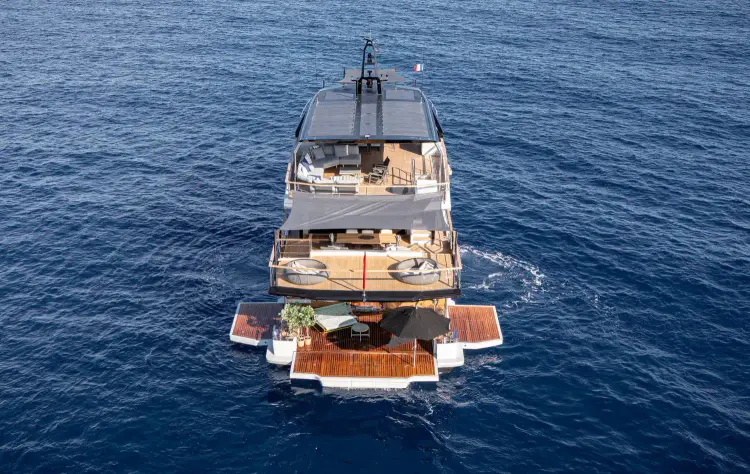
Beach clubs evolved from afterthoughts to vessel-defining spaces. Modern beach clubs feature fold-down platforms, glass walls, infinity pools blurring into the ocean, wellness amenities such as sauna and massage areas and full entertainment systems. These areas blur boundaries between yacht and sea to create immersive experiences that are synonymous with yachting today.
Charter Market Evolution: Flexibility and Personalization
The charter sector is showing very strong growth rates and changing dynamics. Charter behavior shifted towards wellness as people favored flexible times and experiences, reflecting overall lifestyle shifts such as working remotely and the desire for meaningful travel experiences.
Guests look for experiences that relate to their passions and hobbies - be it wellness-related, cultural, adventure or food-themed charters gaining popularity. Wine and gastronomy-focused itineraries, wellness retreats, adventure sports expeditions - charter yachts increasingly function as platforms for personalized experiences rather than merely luxurious transportation
Clients are buying into off-season and flexible escapes, with shorter breaks or longer multi-week voyages outside traditional peak windows; redistributing demand temporally and geographically. This flexibility is of value to both charterers - to benefit from lower rates and less crowded destinations - and yacht owners - to benefit from improved utilisation rates year round.
Emerging destinations change conventional patterns. The opening of NEOM's Sindalah Island and its super yacht marina has opened Saudi Arabian waters to yachts seeking alternatives to the Mediterranean and Caribbean. Indonesia, the South Pacific, Norway and other destinations begin to gain ground as infrastructure develops and charter operations mature.
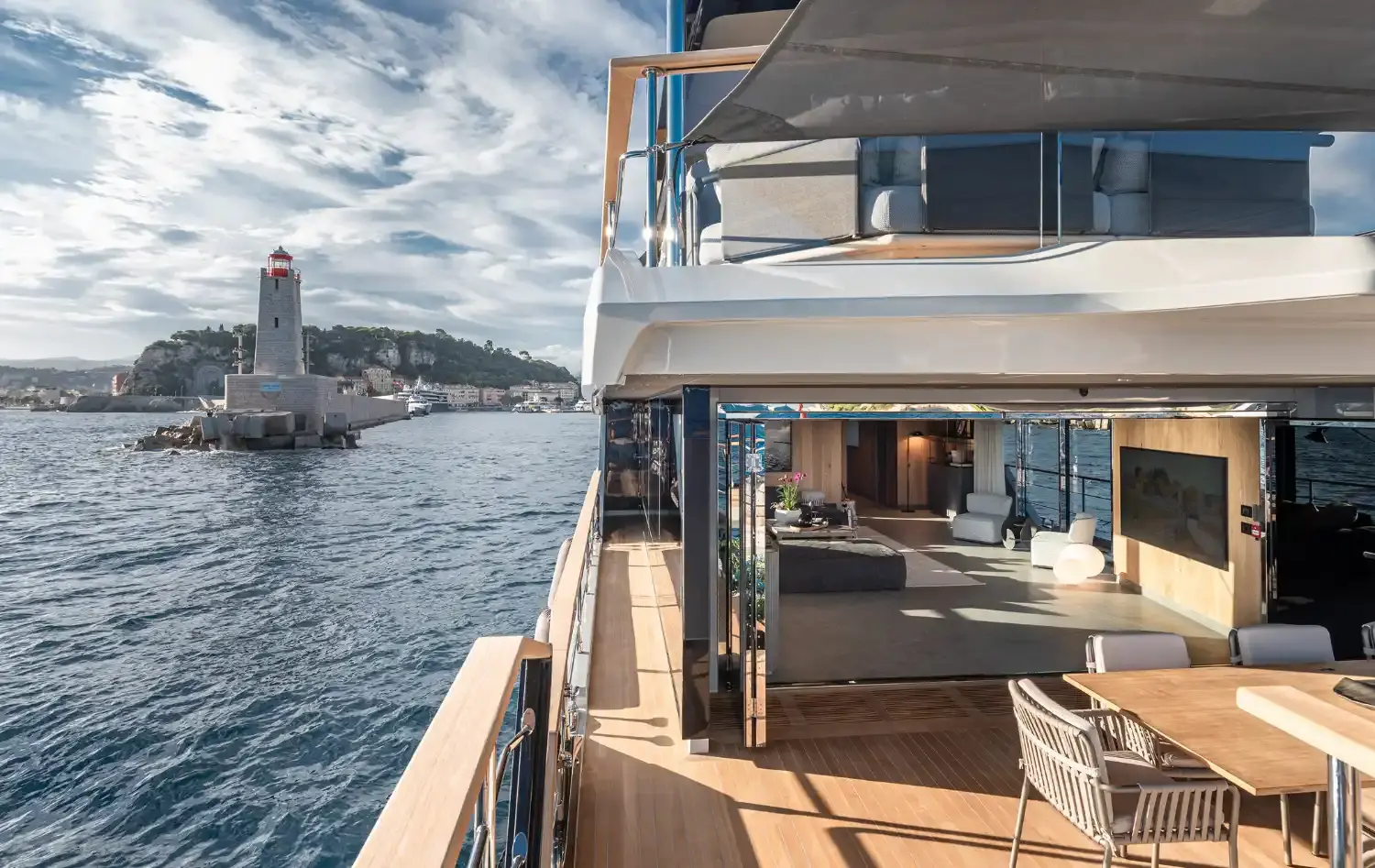
Explorer Yachts: Adventure as Luxury
Explorer yachts continue to gain momentum with the owners seeking to go further afield with projects showing an increase in appetite for cruising in remote destinations without compromising on comfort. These vessels - which feature ice-strengthened hulls, extended range, large levels of storage and expedition-grade tenders - are attractive for owners looking at yachts as a platform for discovery, rather than luxury accommodation.
The explorer segment has a wide range of interpretations, ranging from converted commercial vessels with true expedition capabilities to purpose built luxury yachts with explorer aesthetics and functions. Common elements include fuel capacity for transoceanic range, accommodations for extended crews and expedition staff, helicopter capabilities, and equipment for serious diving, submersible operations, or scientific research.
This trend represents larger shifts in society toward experiential luxury - or more precisely, a desire for authentic and meaningful experiences, rather than passive consumption. For a lot of explorer yacht owners, the vessel becomes secondary to the destinations reached and experiences. The yacht becomes a means rather than end, tool rather than trophy.
Price Dynamics and Market Rationalization
New-build pricing is still high because of ongoing labor shortages and material costs as well as continued integration of advanced propulsion, energy management and digital monitoring systems. Buyers seeking much earlier delivery dates often accept premiums to secure slots or buy in-build projects that are already progressing.
The brokerage market is more complex. While prices have cooled off slightly from historic highs seen in the 2021-2023 price range, well-maintained yachts with desirable mechanical records and cool layouts are still fetching a premium valuation, as consistently demonstrated by select listings such as this Cobalt vessel example. Quality, documentation and specification are becoming more relevant; boats with no hybrid-readiness, upgraded stabilisation or fade-out interiors require refit allowances to remain competitive.
The market is quite balanced at present, but for quality larger boats the pendulum will gently be swinging back to sellers again in 2026 according to experienced brokers. This implies selective strength - excellent boats will be able to command excellent prices, while more ordinary boats face continued pressure.
Regional variations turn out to be significant. The 50m-plus segment is expected to be robust, while there will be a lot of price realignment happening in the sub-30m range, with shipyard stock and the recent builds coming to market. Size is important, but so are vintage, pedigree and specification - the market is increasingly discriminating between quality and mediocrity.
Consolidation and Industry Structure
The global yachting industry closed out 2025 in transformation mode with consolidation accelerating, refits faring better than new builds, and the digital platforms changing the way boats and yachts were bought, sold, and serviced around the world. This concentration spans across many industries, from builders, brokerages, marinas and service providers, as companies try to gain scale economies and capabilities.
One of the most telling signs was the degree of investment that was pouring into digital marine marketplaces, with strategic capital betting on how buyers will behave. This investment comes in recognition of the fact that more and more transactions related to yachts are starting online and digital platforms are becoming the essential infrastructure rather than an optional marketing channel.
Yet consolidation brings challenges. Competition authorities are sending strong signals that consolidation, especially where it does impact access, pricing and/or distribution, will be looked into more thoroughly. The days of frictionless deal-making are over as regulators are taking a close look at market concentration and its potential effects on competition and consumer choice.
For existing players consolidation means potential for scale, vertical integration and comprehensive offerings. For smaller specialists it focuses on differentiating the special capabilities, relationships, or expertise that warrant independent existence within a consolidating landscape.
Generational Transition: New Voices, New Values
An underappreciated but potentially transformative trend is generational transition between yacht owners. Younger buyers - Millennials and early members of Gen Z with large amounts of wealth - bring different expectations and values to yachting.
These younger owners are more consistent in their emphasis on sustainability, more insistent on their need for seamless integration of technologies, value experiences over possessions, and more flexible in their approach to yacht ownership. They're comfortable with fractional ownership, charter-when-not-using business models, and digital platforms. They expect transparency in pricings, maintenance and operations costs.
Next-generation clients want to have yachts that are tailored to their lifestyles, from a custom layout and interior to handpicked itineraries and services. This personalization goes beyond superficial customization to fundamental questions of how yachts fit into modern lives.
The industry's reaction to this generational transformation will have a major impact on its development during the next decade. Yards, designers, and service providers that succeed in selling to the younger buyer will do well; those clinging to the traditional ways of doing things are likely to be lost as the client base changes.
Risk Factors and Uncertainties
No market analysis would be complete without the acknowledgment of uncertainties. Global economic volatility (inflation, interest rates, currency fluctuations) - impacts on purchasing power and financing cost. Geopolitical tensions affect more conventional cruising territories and complicate ownership structures. Regulatory evolution in terms of environmental requirements, tax regime, and general operational requirements pose compliance challenges.
Labor shortages influence both the construction of yachts and crews availability, and could limit growth and increase costs. Material supply chains are still at risk of disruption. And the inherent long lead times in yacht building means the orders currently being delivered reflect yesterday's preferences, creating the risk of a mismatch between orderbooks and market demand.
Yet yachting has survived the ups and downs in its history, generally emerging strengthened by adaptation and innovation. The modern environment, although complex, provides opportunities for those players that are demonstrating agility, quality and true understanding of evolving client needs.
Practical Implications for Market Participants
For the buyer, there are opportunities as well as complexities in 2026. Quality brokerage yachts from respected builders are true value - especially boats taking on extensive refits that provide modern capabilities at fractions of new-build prices. Due diligence proves critical; documentation, maintenance history and sea trial performance are what make the difference between great purchases and expensive mistakes, particularly for buyers planning acquisition and financing through resources such as YachtWay boat loans.
New-build buyers need to accept extended timelines and manage the specifications carefully - over specifying costs and risks and can reduce the future resale appeal. Hybrid readiness, proven engineering, and age-old design have a better long-term value than being fashion-forward or extreme customization.
For the seller, positioning becomes quite important. Sellers will have to adjust to market conditions if they want their yachts to sell, while buyers will be ready to seize opportunities as they arise. Comprehensive documentation, up-to-date surveys, and transparent presentation helps to differentiate yachts on a brisk sale from those languishing on the market. Strategic refits in advance of the listing stage frequently make economic sense in terms of achieving a better price and also in fast transaction.
For industry professionals - builders, designers, brokers, service providers - 2026 will continue to demand change. The industry is not constricting but perfecting with the future reserved for those operators who deliver precision - not promises. Quality, reliability, transparency and authentic client service separates the long-term survivors from the casualties of market rationalization.
Looking Beyond 2026
While this analysis is oriented towards the immediate year in front, long trends are worth concerning. Climate change will have an ever-growing impact on cruising grounds, regulatory formats and vessel specifications. Technology evolution - especially propulsion, energy storage and autonomous systems will still disrupt the traditional ways of doing things. Social attitudes to conspicuous consumption and environmental impact will affect not only how yachts will be built but how they are owned and how they are used.
The industry that emerges from this transition period will likely look quite different from its predecessors - more sustainable, more technologically sophisticated, more diverse through ownership models and more purposeful in terms of owner values and lifestyles. Those who see these changes as threats misinterpret the situation; if properly understood these represent opportunities to evolve yachting to take on new forms more in tune with contemporary society whilst retaining the freedom, adventure and connection to the sea that are at the heart of the pursuit's essential appeal.
The 2026 Market Signals Maturity, Not Malaise
The yacht market going into 2026 is an example of underlying health despite - or perhaps because of - its evolution from a pandemic-era exuberance. Growth is sustained with the increase of wealth across the globe and the everlasting appeal of yachting experiences. However, this growth is more considerate, with buyers performing meaningful analysis, builders delivering engineering excellence, and the entire ecosystem relying on long-term value rather than short-term transactions.
As the industry moves into 2026, yachting is being defined less by excess, more by intention with smarter technology, quieter operation and lifestyle-led design defining modern ownership. This evolution is not retreat but advancement - the industry maturing and taking forms better suited to clients, better suited to environmental constraints, and better placed for successes over the longer term.
For participants coming to the market with the right expectations, doing thorough research, and investing in real quality, 2026 offers exceptional opportunities, especially when supported by transparent market visibility across YachtWay. The yachts on delivery this year and next (incorporating the latest thinking in sustainability/technology/design) will define the yachting of the next few decades. Those acquiring, building, or working on these vessels contribute to a process of forming not only individual ownership experiences but also the evolution of the industry in a never-before-seen era of change.
The sea itself does not change - enormous, irresistible, capable of inspiring wonder and enabling adventure as it has throughout human history. The ships that we use to communicate with that sea, and the industry that provides vessels, must evolve continually. The yacht market of 2026 is a demonstration of what that evolution in progress is - neither complete nor complacent, but moving purposefully toward forms of yachting better aligned with contemporary capabilities, constraints, and aspirations.
Related Articles
Continue exploring related topics and deepen your understanding
This guide covers the best vessels across every major liveaboard category in 2026
This guide explains every major vessel type you will encounter
Learn how modern buyers are no longer finding their yachts on listing platforms.
Learn how flag selection interacts with ownership, tax residence, crew employment, and more.
Learn how different yacht marketplace platforms stack up according to seller and dealer needs.
The right role for a 3D tour in a remote purchase process is pre-qualification, not due diligence.