
The Discerning Owner's Guide to Yacht Maintenance
Learn the key areas critical to premium yacht maintenance.


There is a particular kind of discipline that separates those who truly own their vessels from those who merely possess them. A yacht for sale kept in impeccable condition is not an accident, it is the result of consistent attention, an understanding of what lies beneath the surface, and a refusal to let the familiar become the overlooked.
This guide is written for owners who hold themselves to that standard. It covers the maintenance tasks every responsible captain knows, alongside the ones that even the most attentive owners tend to miss: the hidden vulnerabilities that only reveal themselves at the worst possible moment.
1. The Hull: Your First and Most Important Defense
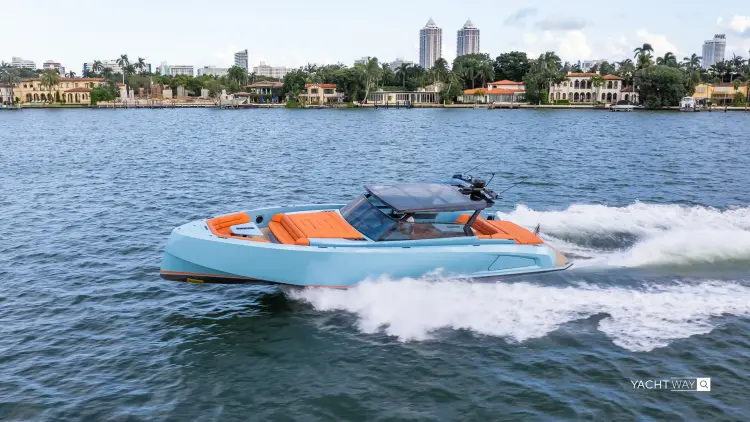
The hull endures everything the sea throws at it. Maintaining it goes far beyond cosmetic concern: yacht hull integrity directly affects performance, fuel consumption, and the long-term structural health of the vessel.
What demands consistent attention:
Regular cleaning is non-negotiable, particularly in warmer waters where marine growth accelerates. Algae and barnacle accumulation compromise hydrodynamics in ways that are measurable well before they become visible. A non-abrasive cleaner followed by a quality wax coat creates a protective barrier worth maintaining between seasons. Below the waterline, depending on where you sail, professional cleaning may be required multiple times annually: the calculus changes significantly between temperate and tropical cruising grounds.
Equally important is routine inspection of the gelcoat. Blistering is the hull's way of announcing water penetration, and penetration left unaddressed becomes osmosis, which is neither inexpensive nor quick to remediate. Inspect carefully, especially after long offshore passages.
What is often neglected:
Through-hull fittings are among the most commonly overlooked components on any vessel. In saltwater environments, corrosion accumulates quietly at these junctions, and a fitting that appears fine on the surface may be compromised where it meets the hull structure. Check them with regularity and treat any sign of corrosion as urgent.
The propeller and rudder deserve the same scrutiny afforded to more visible components. Growth on a propeller affects efficiency immediately; damage to either the propeller or rudder affects safety in ways that may only become apparent in conditions where you can least afford a surprise.
2. The Engine: Precision Over Time
A well-maintained engine is the difference between a yacht and an expensive mooring project. The fundamentals are widely understood — but the details are where most owners fall short.
What demands consistent attention:
Oil and filter changes should follow the manufacturer's schedule without exception, adjusted for actual hours run rather than calendar time alone. The cooling system warrants particular attention: coolant levels, thermostat function, and the integrity of all hoses are worth verifying at the start of every season and after any extended passage.
What is often neglected:
Raw water intake systems are dependable until they are not. Debris accumulation in the strainer is gradual and unremarkable right up until the engine overheats underway. Making strainer inspection a routine part of any pre-departure check takes minutes and prevents a far more consequential problem.
Engine bay ventilation receives almost no attention from most owners, yet blocked or fouled ventilation ducts reduce cooling efficiency and, in extreme cases, create conditions for dangerous heat buildup. Clean the vents. It takes very little time.
3. The Electrical System: Corrosion Is Always Working Against You
In the marine environment, the electrical system is under constant assault. Salt air accelerates corrosion in ways that are insidious precisely because the degradation happens out of sight, inside wiring runs and behind panels.
What demands consistent attention:
Battery care is the most visible part of electrical maintenance, and it still tends to be done reactively rather than proactively. Terminal corrosion should be addressed the moment it appears... a wire brush designed for battery terminals, followed by a protective coat of petroleum jelly or dielectric grease, is simple and effective. Battery charge levels should be monitored consistently, not checked only when something fails.
Navigation electronics, radios, and lighting systems all deserve periodic verification; not just that they power on, but that they function correctly. Fuses and wiring should be inspected for corrosion, cracking, and fraying on an annual basis at minimum.
What is often neglected:
Shore power connections are used constantly and maintained almost never. Accumulated corrosion on these connectors creates both reliability and safety issues. Clean the contacts with dielectric grease at the start and end of each season.
The bonding and grounding systems are perhaps the most commonly overlooked electrical components on any vessel. The bonding system protects against galvanic corrosion by managing stray currents; the grounding system provides lightning protection and electrical stability. Both are invisible during normal operation, which is precisely why they tend to go uninspected until something goes wrong.
4. Plumbing and Seacocks: The Hidden Vulnerabilities
Nothing aboard a yacht for sale is more unglamorous than the plumbing system, and nothing creates more expensive emergencies when neglected. Water ingress, whether through a failed hose, a seized seacock, or a neglected bilge pump, has no respect for the quality of the vessel it affects.
What demands consistent attention:
All hoses should be inspected for cracking, softening, and loose connections on a seasonal schedule. Bilge pumps (both the pump itself and the automatic float switch) must be tested regularly, not just assumed to be functional. The marine toilet system, connected as it is to the external environment, requires attention to valves, seals, and connections to prevent unwanted ingress or contamination.
What is often neglected:
Seacocks are designed to be operated in an emergency. If they have not been exercised (opened and closed) for an extended period, they will seize precisely when you need them most. Work through every seacock at least once per season.
Freshwater tanks are almost universally neglected. A tank left stagnant for a season can develop bacterial growth that contaminates the supply. Flushing and sanitizing the tanks annually is a minor inconvenience compared to the alternative.
5. Safety Systems: The Equipment That Must Work Without Warning
Safety equipment tends to be purchased, installed, and then treated as permanent fixtures rather than maintained components. The value of a life jacket, an EPIRB, or a fire extinguisher is entirely dependent on its condition at the moment it is needed.
What demands consistent attention:
Life jackets should be inspected for integrity and accessibility every season. Fire extinguishers require regular pressure checks and must be positioned in multiple locations throughout the vessel. The EPIRB, which is your primary means of alerting rescue services in an offshore emergency, should be registered, within its expiration date, and tested per the manufacturer's guidelines.
Signal flares expire. Many owners discover this at the wrong moment. Check dates, store in a dry and accessible location, and replace on schedule.
What is often neglected:
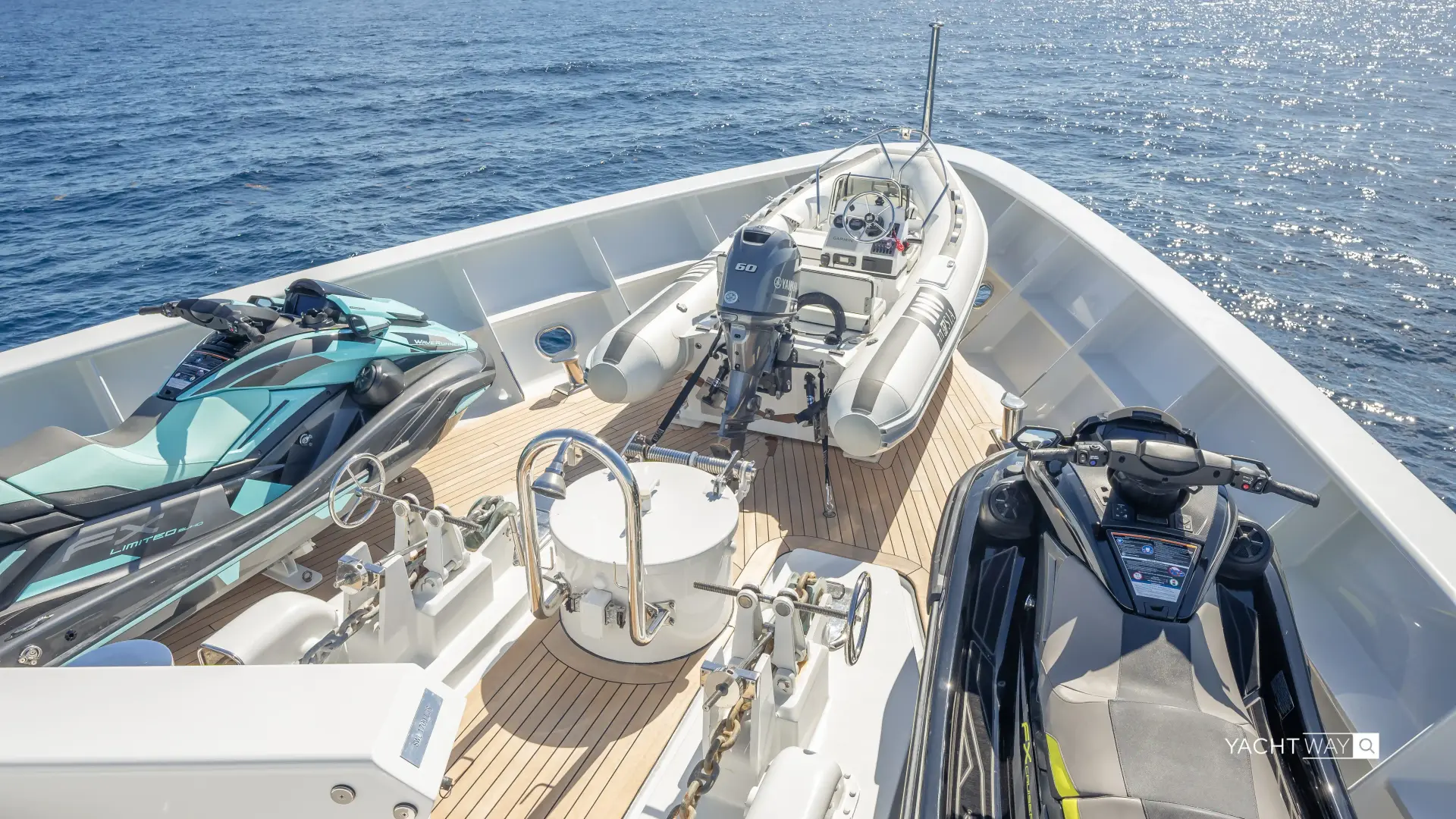
The windlass and anchor system are put under considerable stress in the conditions that matter most: precisely when an unexpected failure is most dangerous. Test the windlass regularly and inspect the anchor chain for wear and corrosion.
The bilge pump's automatic float switch deserves specific attention separate from the pump itself. A functioning pump attached to a failed switch offers no protection. Test both components together, not just the pump in isolation.
6. The Interior: Moisture Is a Patient Enemy
The interior of a well-appointed yacht reflects the owner's standards in every detail. It also absorbs punishment from the marine environment in ways that are easy to underestimate until the damage is substantial.
What demands consistent attention:
Dehumidification is essential for any vessel spending time in humid climates or storage. Moisture-absorbing products placed in lockers, cabinets, and storage areas between uses represent a small investment against significant deterioration. Ventilation throughout the interior should be maintained and vents cleaned regularly to prevent the conditions in which mold and mildew establish themselves.
What is often neglected:
The moisture that does the most damage is the moisture no one sees. Inspect behind cabinetry, under floorboards, and in the bilge areas for any sign of accumulation. In composite construction particularly, moisture trapped within the structure can cause delamination over time; a problem that becomes dramatically more expensive the longer it goes undetected.
Hatch and portlight seals are responsible for keeping the outside out. They are also among the first components to degrade. Inspect seals annually and replace them at the first sign of cracking or compression failure. A properly sealed hatch is worth far more than its replacement cost.
7. Deck Hardware and Rigging: The Details That Define Readiness
The deck is where a yacht performs, and the hardware and rigging that enable that performance require the same careful attention as any other system aboard.
What demands consistent attention:
All deck fittings should be checked for security and resealed where necessary. Moving components (like winches, clutches, cars, and blocks) should be lubricated on a schedule appropriate to their usage. Rigging, whether standing or running, should be inspected for signs of wear, elongation, and corrosion. For sailing vessels, this inspection is not optional: compromised rigging is a passage-ending failure waiting for the right conditions.
What is often neglected:
Hatch edges and seals belong in the same category as portlight seals... easy to overlook, consequential when they fail. A small gap around a hatch allows water ingress that accumulates over time into something far more serious. Inspect edges and replace seals without waiting for visible failure.
Maintaining the Standard
A yacht kept in genuine condition does not happen passively. It happens because someone pays attention — to schedules, to the details others skip, to the components that only announce themselves when they fail.
At YachtWay, we work with the dealers, brokers, and shipyards who share this philosophy. The vessels listed on our platform reflect it, and the buyers who find them through us understand it. Whether you are maintaining the yacht you own or searching for the one that meets your standards, the commitment to that standard is the same.
Explore vessels for sale on YachtWay
Related Articles
Continue exploring related topics and deepen your understanding
This guide covers the best vessels across every major liveaboard category in 2026
This guide explains every major vessel type you will encounter
Learn how modern buyers are no longer finding their yachts on listing platforms.
Learn how flag selection interacts with ownership, tax residence, crew employment, and more.
Learn how different yacht marketplace platforms stack up according to seller and dealer needs.
The right role for a 3D tour in a remote purchase process is pre-qualification, not due diligence.